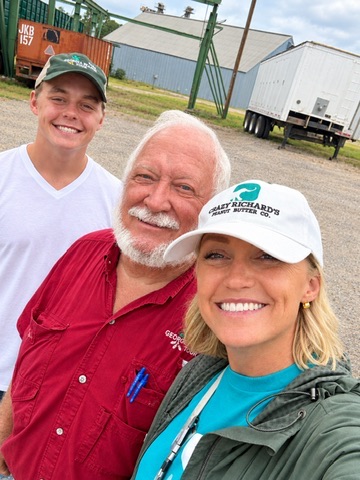
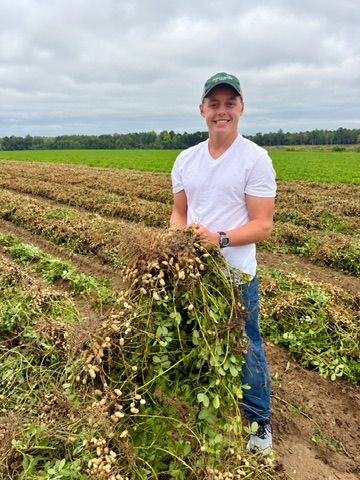
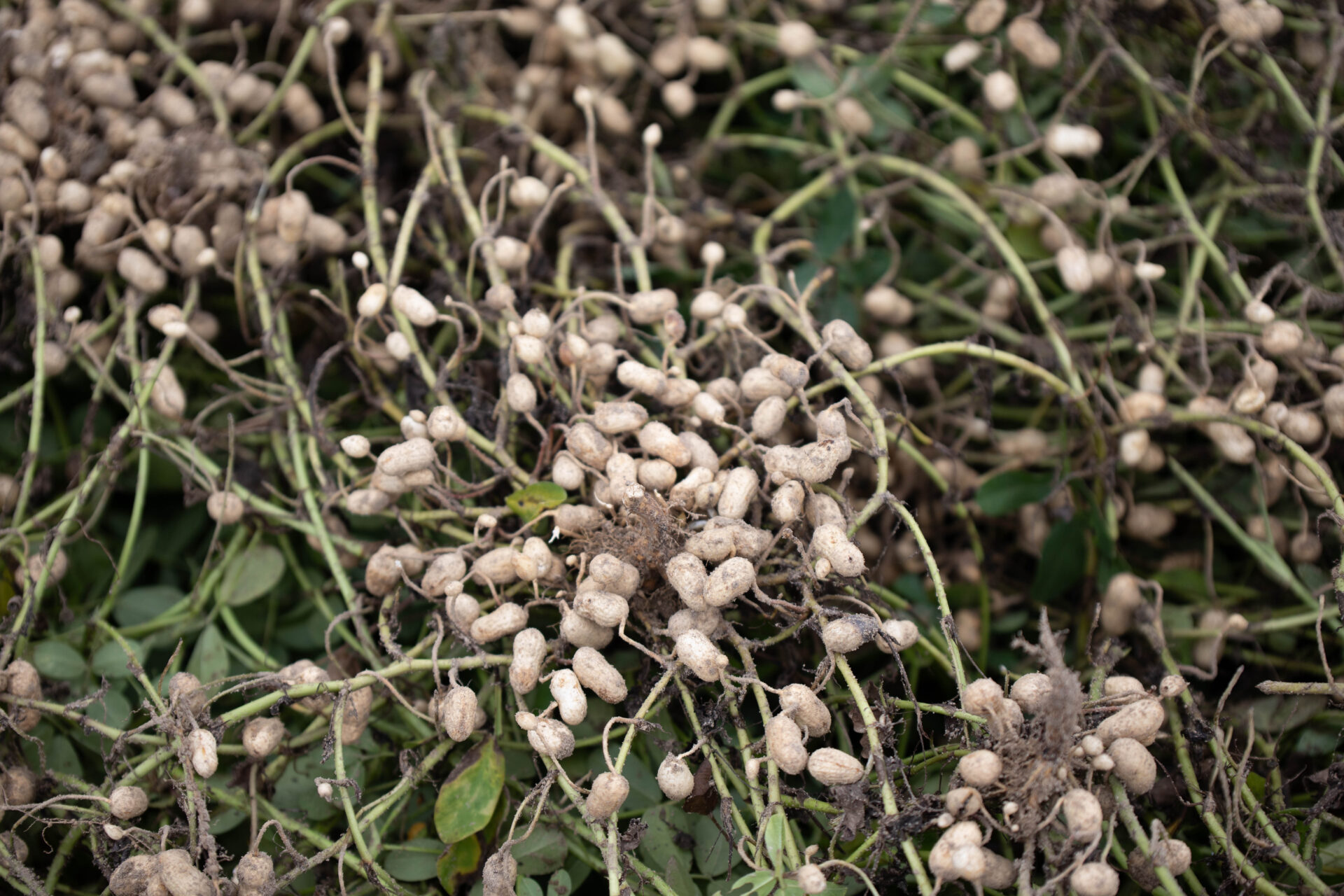
I recently returned from a visit to Savannah to participate in the 38th annual Georgia Peanut Tour, and even though I’ve been to a peanut field before, this trip felt completely different because I brought my teenage son with me. He was firing off questions that were equal parts hilarious and extremely valid: “How do you even know where the peanuts are?”, “If it rains at the worst time, are you just doomed?”, “What’s the biggest ‘oops’ that costs real money out here?”, and “Be honest, do people ever eat one straight from the ground?” Spoiler alert: we did, right there in the field…and we loved them! Watching him take it all in and start connecting the dots in real time was easily one of my favorite parts of the whole trip.
And honestly, what hit me the most wasn’t just the peanuts (although, yes, the peanut content was strong). It was the people. Peanut farming runs on farm families. Often the kind where the knowledge is passed down like a family recipe, and you can feel the pride in how they talk about their land and their work. It’s not a “clock out at 5” kind of job. It’s planning, timing, weather, problem-solving, and making a hundred small decisions that can turn into one very big outcome. Being there with my own kid while meeting families who live that reality every season made it feel personal in a way I didn’t expect.
Something else I loved seeing up close is how modern farming is basically a never-ending upgrade cycle. Farmers are constantly optimizing, looking for ways to improve what they’re doing and stay ahead of whatever the season throws at them. And they’re not just winging it. They work closely with university research specialists and experts to stay on top of the latest science, then team up with manufacturing and equipment companies to customize technology that fits their farms. It’s hands-on work, but it’s also research-driven, tech-enabled, and impressive to watch. My son came away with a totally different perspective: farming isn’t just “driving tractors.” It’s strategy, data, equipment, and experience all working together.
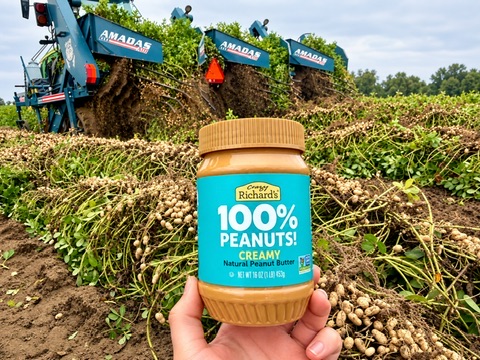
We also got a behind-the-scenes look at what happens right after peanuts leave the field (basically their glow-up moment!) This is where grading comes in, and it’s a whole process focused on one thing: quality. Peanuts get evaluated so you know exactly what you’re working with, and this part made me think about how intentional we are at Crazy Richard’s. We only buy the highest graded, top-quality peanuts, and we source them at just the right point in maturity for the best flavor. That’s a big reason our peanut butter tastes so ridiculously good even with a super simple ingredient list. And yes, we’re picky in a very specific way: we choose a particular variety called a Runner peanut because we believe it’s the sweet spot for peanut butter—consistent, flavorful, and exactly what we want in every jar.
Then came the Port of Savannah, which for me was a first, and it was genuinely mind blowing. The scale is unreal, and the organization is next level: rows and rows of containers, massive equipment moving with purpose, and a constant hum of coordination that makes you realize how much has to go right for global supply chains to work. Touring the port put the peanut crop into a much bigger context. Peanuts do not just turn into peanut butter jars and protein bars; they are also a critical ingredient in peanut based RUTF products that are shipped around the globe to help fight malnutrition and childhood hunger. And it is pretty incredible to think that our humble, hard-working American peanut farmers are growing a crop that can travel far beyond our pantries here in the USA and make a real impact around the world. Standing there, it was impossible not to think about the why behind it: peanuts can be comfort food, but they can also be life changing food. That mission hits close to home for us because it aligns with what we care about through our Healthy Kids Happy Future project, supporting efforts that help get nourishment to kids who need it most.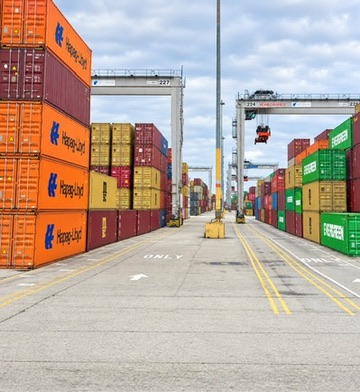 I came home from Savannah feeling really grateful I got to hang out with our peanut farmers, and even more grateful that I got to experience it with my son. It’s one thing to tell a teenager “this is where food comes from,” but it’s a whole different thing to stand in the field and actually meet the people growing it. Seeing it up close makes it click that peanut butter doesn’t magically appear on a shelf, it starts with farm families who know their land, keep learning, and keep leveling up season after season. A lot happens behind the scenes, but the end goal is honestly pretty simple: amazing peanuts handled with care so you can open a jar and spread it, blend it, or spoon it. That’s the kind of story that sticks, and I know I’ll be thinking about it every time I reach for peanut butter.
-xoxo Kimmi Wernli, President & Owner of Crazy Richard’s