
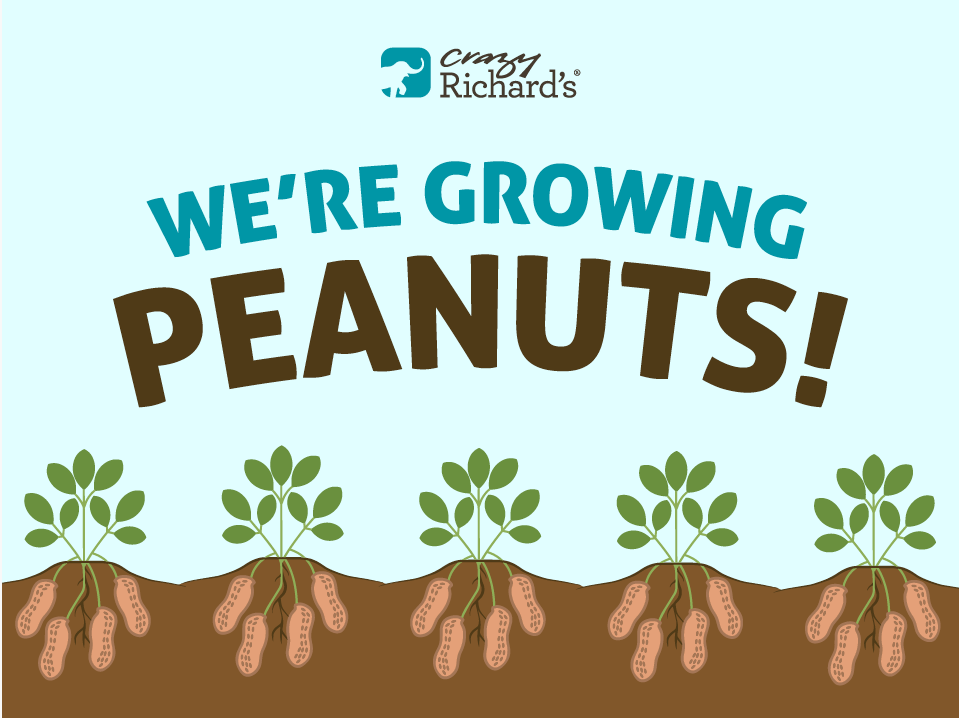
Welcome! You’ve here on this page because you received a package of Crazy Richard’s Peanut seeds to plant and grow in your own garden. They’re Virginia peanuts, and they came from plants we grew in our own small plot here at Crazy Richard’s HQ in Plain City, Ohio!
We’re proud to support American farms and farmers. A few years ago, watching their work inspired us to try growing some of our own. Our growing season up here is quite a bit shorter than it is in Georgia and other southern states, so we start them indoors. But we’ve had success–and a lot of fun!–watching them grow, and we want to share that joy with you.
3 Simple Steps to Grow Your Own Peanuts!
- Place 3 pucks of soil into a container and add about 6 Tablespoons of warm water. When it has completely expanded, you can move the soil into the paper cup.
- Plant one or two seeds into the soil, about 1 inch below the surface. Snap the clear lid on top and keep in a warm sunny window.
- Watering: keep the soil consistently damp but not soggy.
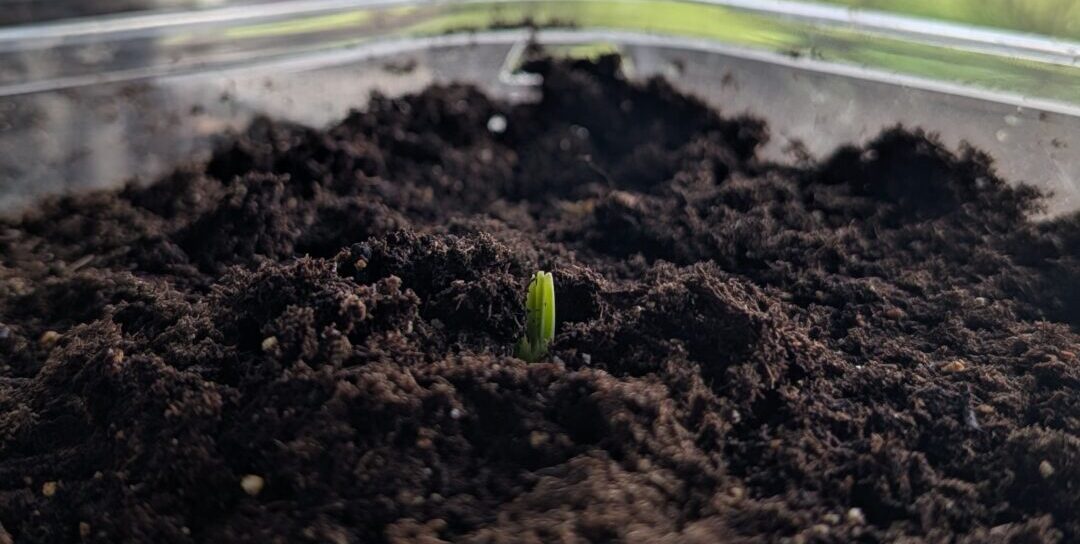
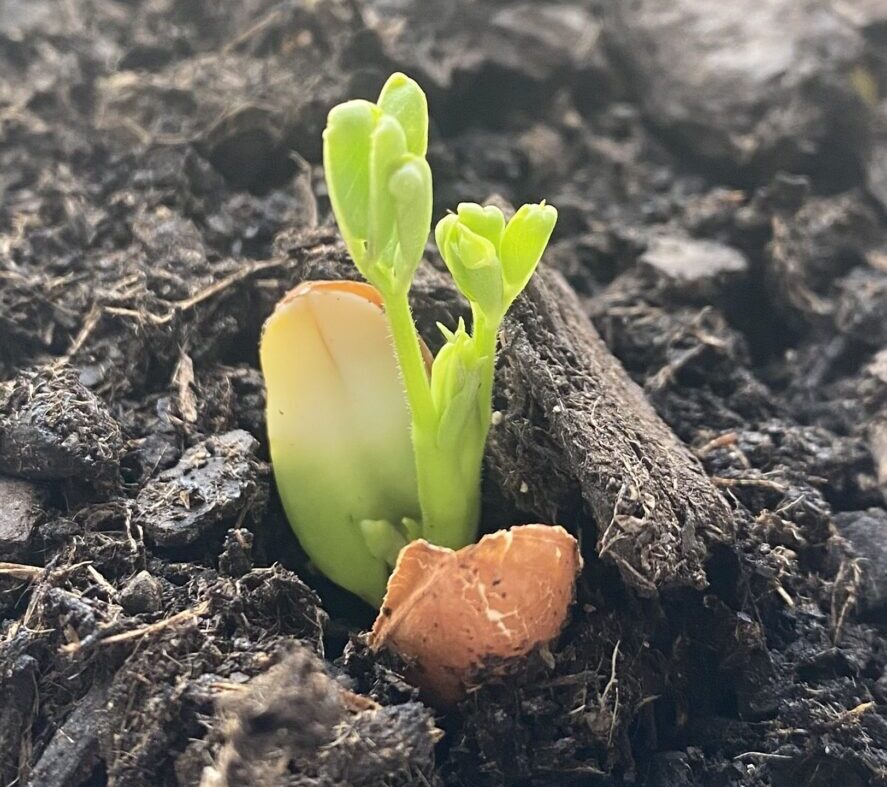
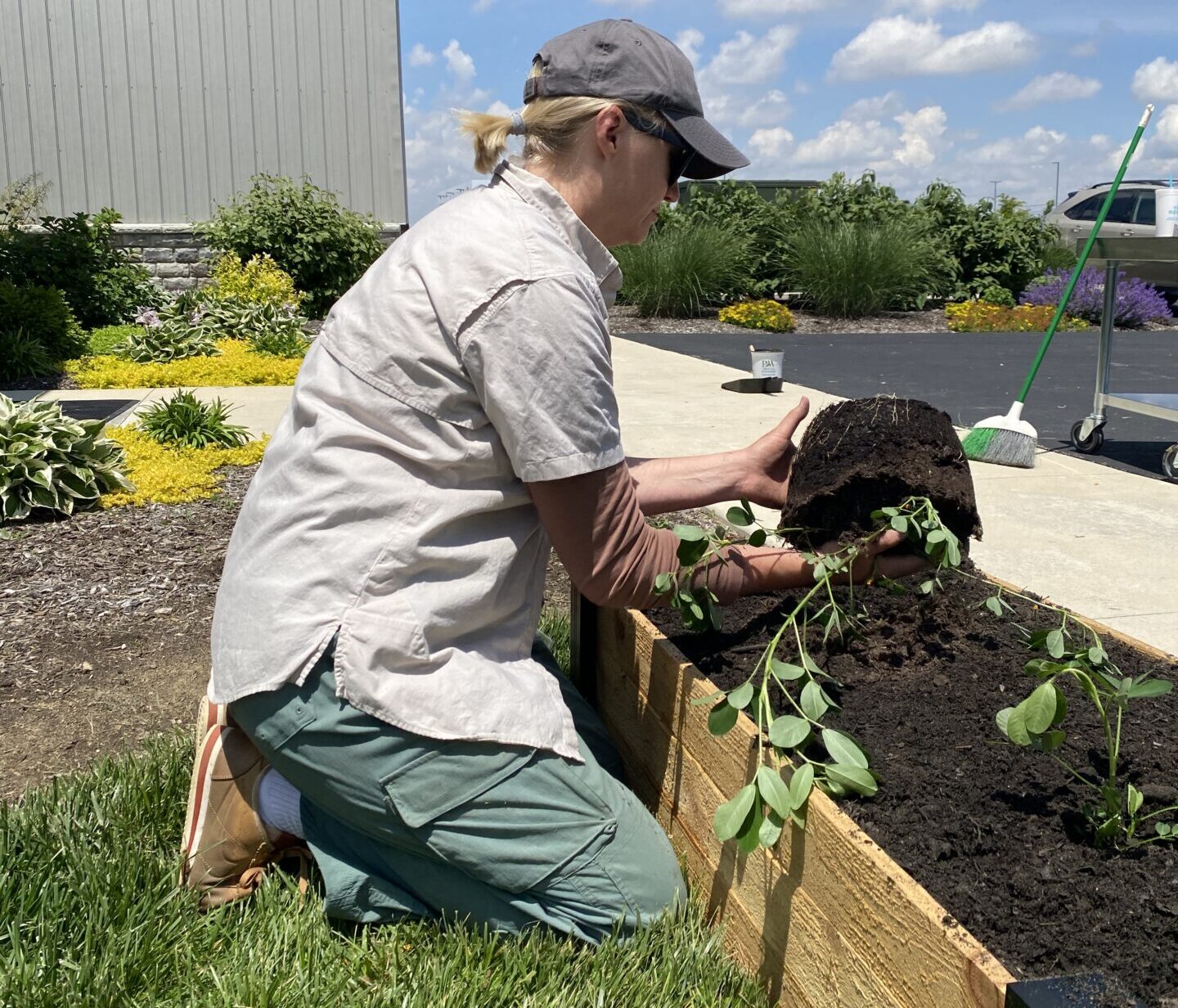
The seeds will sprout in a week or two. Replant in a larger pot when you start to see roots at the bottom, or you can plant directly outside when the soil reaches 65 degrees F.
More information: Can You Grow Peanuts Where You Live?
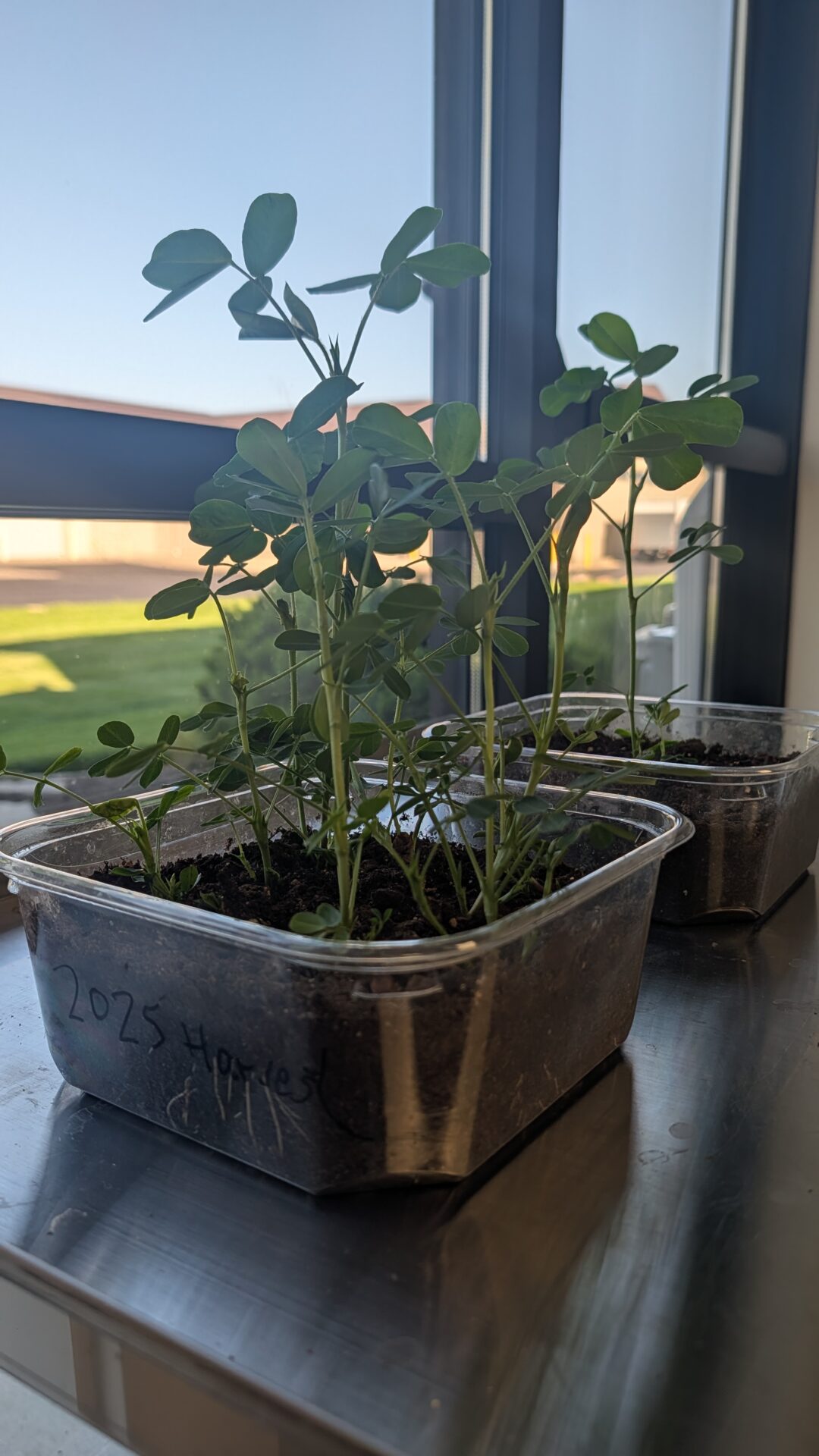
Sure! Peanuts have a fairly long growing season (from 130-160 days), so in the US they’re typically grown as a commercial product in the South. But for home gardens, you can grow them farther north; just start them indoors until it warms up enough outside.
You’ll need:
- Warm temperatures (a long frost-free season is best)
- Full sun (6–8+ hours/day)
- Loose, well-drained soil (sandy loam is ideal)
If your summers are short or cool, peanuts can still be grown in raised beds or large containers, but yields may be smaller.
When to Plant Peanuts
Plant peanuts after the last frost, once soil temperatures are consistently warm. In many areas, that’s late spring. We start our peanuts indoors in the spring and then transplant them outdoors when it gets reliably warm outside and the soil is about 65 degrees.
Peanuts generally need about 130-185 days of warm growing weather from planting to harvest (variety dependent).
What You’ll Need
- Raw peanut seed (garden seed peanuts, not roasted/snack peanuts)
- A sunny growing spot
- Loose soil or a raised bed. If you’re growing in a pot, you’ll need one that’s at least 18-20 inches acroos and 18 inches deep per plant.
- Mulch (optional but helpful). We use straw on top of our garden beds.
- Consistent watering early on
Soil Prep: The Key to a Good Harvest
Peanuts form their pods underground, so soil structure matters. Aim for soil that is:
- Loose and crumbly
- Well-draining
- Low in rocks and clumps
If your soil is heavy clay, consider a raised bed or amend generously with organic matter to improve texture and drainage.
How to Plant
- Spacing: Break open a raw peanut shell to expose the seeds. Plant seeds a few inches apart, then thin if needed as seedlings grow.
If you’re transplanting established seedlings outside, Plant them about 12-18 inches apart. You’ll want to do this when the ground gets to be about 65 degrees. - Depth: Plant about 1–2 inches deep. You’ll want it on the deeper side if you’re transplanting seedlings, but don’t go too far down.
- Rows/blocks: Peanuts do well in rows or small blocks, as long as they have room to spread.
Keep the planting area evenly moist until seedlings establish.
Watering & Care
- Early growth: Water regularly to help plants establish. Avoid waterlogged soil or the seeds will rot instead of sprouting.
- Mid-season: Moderate, consistent moisture is best—avoid waterlogged soil.
- Late season: Reduce watering as plants approach maturity to help pods finish.
Peanuts are fairly low-maintenance once established, but they do appreciate:
- Weeding (especially early)
- Mulch to reduce weeds and keep soil from drying out. We use straw on top of our garden beds.
The Cool Part: How Peanuts Form Underground
After peanuts flower, the plant forms a “peg” that grows down into the soil. The peanut pods develop under the surface, so avoid aggressive digging or cultivating around the base of the plant once it’s pegging.
Container Growing Tips
If you’re short on garden space, try a large container:
- Use a wide pot (peanuts like room to spread)
- Choose light, well-draining potting mix
- Keep in full sun
- Be ready to water more often than in-ground beds
When to Harvest Peanuts
Peanuts are usually ready when:
- The plant begins to yellow and looks like it’s slowing down
- Pods feel firm and well-formed
To harvest:
- Loosen soil carefully around the plant.
- Lift the whole plant and gently shake off soil.
- Pull pods from the roots.
Curing (Drying) Your Peanuts
Curing helps improve flavor and storage life.
- Hang plants or spread pods in a warm, airy place
- Cure until shells and inner nuts are dry (timing varies with humidity, but it’s usually a few weeks)
Once cured, store peanuts in a cool, dry place.
Once your peanuts are dried, you can roast or boil them. You can eat raw peanuts, but they taste more like peas! The peanut flavor really shines once they’re cooked.
Food Safety Reminder
Homegrown peanuts should be properly dried and stored to reduce the risk of mold. If anything smells musty or looks moldy, don’t eat it.